Black Friday originally began as an economic marker embedded in the annual rhythms of American retail. In the mid-twentieth century, the day after Thanksgiving signaled the moment when many retailers moved from financial losses into profitability, bringing their books “into the black.” The timing aligned with a unique combination of consumer readiness, seasonal optimism, and the natural start of holiday shopping. Retailers did not engineer the moment; they responded to an organic surge in demand.

Over time, as the consumer economy expanded and shopping itself became cultural, Black Friday evolved into a coordinated moment of genuine savings. Discounts were meaningful, finite, and concentrated. Families planned around them. The day carried a sense of anticipation because the opportunity was rare. It represented a seasonal pause in the normal retail cycle, a moment when pricing deviated meaningfully and honestly from the norm.
This historical context matters because it explains why Black Friday once felt both communal and significant. It was not engineered theater. It was a real economic event. Today, that meaning has dissolved almost entirely.
The singularity that once defined Black Friday has dissolved into a promotional continuum, leaving consumers unsure of where the real value begins or ends.
When a Sale Stops Feeling Like a Sale
The disappearance of scarcity has fundamentally changed how consumers interpret discounts. When markdowns become constant, they lose their communicative power. Behavioral economists describe this as “discount fatigue,” a state in which promotional messaging fails to create urgency because it has become the default rather than the exception.
For retailers, this fatigue triggers a predictable response: louder messaging, deeper markdowns, and increasingly extended promotional windows. For consumers, it produces something more destabilizing; uncertainty about what anything should cost in the first place. When prices shift weekly or even daily, the anchor price that once helped consumers evaluate value begins to dissolve. Without a stable reference point, trust in the pricing system erodes.
Black Friday was once that anchor. It concentrated demand into a single moment, signaling that seasonal value had arrived. Today, it is simply one point in a long and orchestrated continuum of promotions designed to stimulate constant consumption. And as with any system that tries to be exceptional too often, the exception stops feeling exceptional at all.
The evolution of Black Friday from a focused event to a multi-week marketing season has further reshaped consumer perception. Retailers now launch “Black Friday” sales well before the holiday weekend, and promotional language saturates much of November. Instead of indicating a rare opportunity, the event blends into a broad landscape of perpetual discounts.
This saturation has measurable psychological consequences. When every week promises a new markdown, the signals consumers once relied on to judge value become unreliable. What was historically a clear indicator of limited-time savings now raises more uncertainty than clarity. Shoppers are left trying to determine whether a discount reflects genuine value, a strategic pricing maneuver, or an inflated original price designed to manufacture the appearance of a deal.

In this environment, the traditional meaning of Black Friday collapses under its own weight. If discounts exist everywhere, all the time, then the very notion of a “sale” loses its meaning. When everything is always on sale, consumers are left questioning whether anything is truly a sale at all.
The Rise of Discount Culture and How It Reshaped Black Friday
Discounting originally served as a corrective tool to manage inventory and seasonality. Over time, competitive pressures transformed it into a primary driver of consumer engagement. As e-commerce accelerated and fast fashion normalized rapid production cycles, retailers began leaning on discounts to generate continuous momentum. The more frequently discounts appeared, the more consumers delayed full-price purchasing.
To protect margins, retailers began inflating their baseline prices or designing products specifically to withstand heavy markdowns.

Over time, the gap between “full price” and “sale price” became less about value and more about perception. The promotional calendar expanded, and Black Friday shifted from being the year’s defining moment to being one of many events competing for attention.
This evolution explains why Black Friday feels less distinct today. It has become the culmination of a long promotional season rather than the meaningful exception it once was.
The Illusion of a Deal: When the Numbers Hide More Than They Reveal
The psychology of discounting relies on the assumption that the original price reflects the true value of the product. In reality, many retailers raise prices in anticipation of markdowns, creating a price architecture that produces the appearance of extraordinary savings. A 50% discount looks compelling, yet it may be calculated from an inflated anchor that was never intended to represent the item’s actual market value.
The illusion works like this:
- Increase the “original price” far above the true manufacturing cost.
- Discount 30%–60% so the reduction appears dramatic.
- Train customers to believe the sale price is the reward for shopping at the right time.
A growing body of retail research, including findings from the University of Texas and MIT Sloan, confirms that “ghost prices”, i.e. inflated reference prices, are widespread across mainstream and premium retail.
The illusion creates emotional reward in the moment and financial loss in the long run.
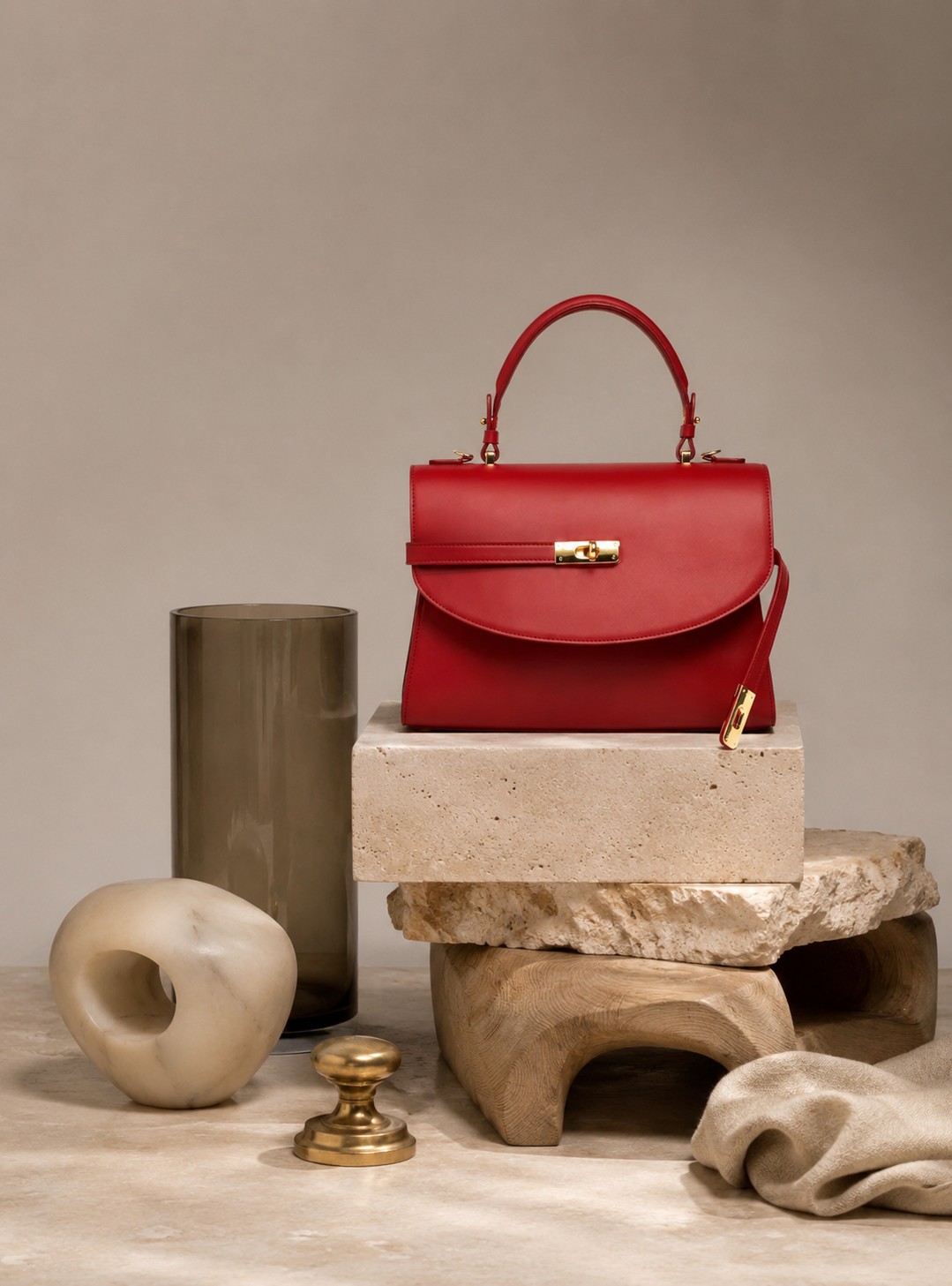
This practice is especially common in categories where material quality and construction are difficult for consumers to gauge visually. A handbag may look refined in photographs, yet the leather may be heavily corrected, the hardware plated, the stitching simplified, and the internal structure reduced; all invisible at first glance but critical to longevity.
These products are engineered to survive the price point, not the customer’s lifestyle. The discount feels rewarding, but the replacement cycle becomes expensive. What looks like a deal often becomes the most costly option over time.
This is the central illusion of discount culture: The savings are immediate but the loss is cumulative.
How Discount Cycles Influence Quality Behind the Scenes
To offer deep and frequent discounts, retailers adjust how products are made. This often means working backward from a target price, forcing compromises in material selection, construction methods, reinforcement techniques, and quality control. Lower-grade hides, synthetic substitutes, simplified stitching patterns, thinner linings, and reduced inspection protocols become tools for preserving margin while sustaining high discount percentages.
The result is a product optimized for turnover rather than longevity. Durability becomes an optional feature, and the item’s expected lifespan aligns with the next wave of promotions. This environment pushes consumers into a cycle of repeated purchases driven not by desire, but by functional failure.
Luxury craftsmanship operates according to a different logic. True artisans select materials with intention, build structure through engineering rather than speed, and preserve quality through techniques that cannot be rushed. The values underpinning luxury are structurally incompatible with the economics of perpetual discounting.
How Pricing Inconsistency Erodes Trust Over Time
Pricing instability is one of the most damaging consequences of discount culture. It undermines the trust that is essential to any long-term customer relationship. When buyers suspect that a product may be discounted days or weeks later, hesitation becomes rational behavior. They begin timing the market instead of trusting the brand. This shift is not a superficial reaction; it reflects a deeper uncertainty about whether full price still represents fair value.
For customers who do purchase at full price in good faith, inconsistent promotions create an even more damaging emotional response. When an item they just bought is suddenly discounted, the feeling is not simply frustration. It is a sense of being misled.
That single moment can permanently alter their perception of the brand’s integrity. The next time they consider purchasing, they hesitate, not because they doubt the product, but because they doubt the pricing.
As promotions become unpredictable across retailers and seasons, this erosion compounds. Consumers begin to wait by default. A McKinsey consumer insights report found that more than 70% of shoppers now delay purchases specifically because they anticipate a future discount. That hesitation is not about saving money; it is about the collapse of pricing as a trustworthy signal.
This is one of the most damaging consequences of discount culture: it replaces confidence with suspicion. Instead of believing that full price reflects true value, buyers start to assume that the “real price” is whatever the next markdown will be. Retail becomes a game of timing rather than a relationship built on credibility.
In luxury, the consequences are even more severe. Luxury depends on belief in craftsmanship, longevity and that the brand stands behind its work. When pricing becomes unstable, that belief is compromised. And once pricing trust is lost, very few customers regain it.
Why Some Luxury Brands Opt Out Entirely
Luxury brands rooted in craftsmanship and long-term value often avoid Black Friday because their pricing is anchored in consistency rather than volatility. Stable pricing communicates respect for both the product and the customer. When prices do not fluctuate unpredictably, customers understand that the value is inherent, tied to the materials, workmanship, and design, not to the timing of a sale. They are not left wondering whether buying early will leave them feeling penalized a week later.
Some luxury houses offer holiday bundles in place of aggressive markdowns. Bundling allows for seasonal gifting moments without compromising price integrity or destabilizing the perceived worth of the products. It provides value without creating the confusion or distrust associated with fluctuating line-item pricing and makes the holiday season feel celebratory rather than transactional.
A Different Approach to Value: Pricing Fairly From the Start
Within this landscape, Silver & Riley follows a pricing philosophy centered around pricing fairly and transparently. Instead of participating in the cycle of inflated baseline prices and engineered markdowns, we structure our pricing around the actual inputs that define the quality of each piece: Italian vegetable-tanned leather, artisanal labor, engineering-led construction, and small-batch manufacturing. Prices are built to reflect the real cost of producing long-lasting goods, not to create room for dramatic seasonal discounts.
This approach serves a purpose far more important than short-term promotional theatrics. It protects the customer relationship. When pricing remains stable, the customer who buys in good faith never has to worry that the same item will surface at a significantly lower price days or weeks later. That stability is a form of respect and communicates that every customer receives the same value, regardless of timing, and that we stand firmly behind the integrity of our work.
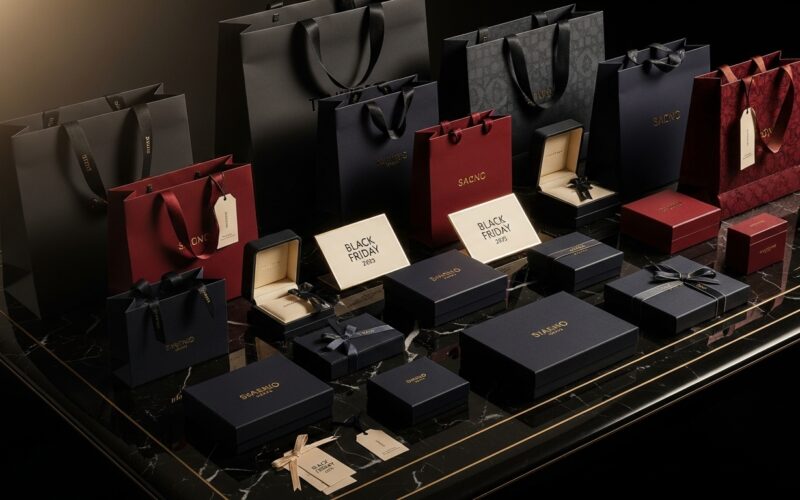
Instead of unpredictable markdowns, we create bundles that offer multi-product value without undermining the inherent worth of individual items. Bundles support gifting moments while preserving the consistency of the pricing model. Customers who prefer to purchase a single item at full price can do so confidently, knowing they are receiving the same fairness, the same craftsmanship, and the same enduring quality as every other buyer across the year.
In a market dominated by discount cycles, volatile pricing, and promotional noise, Silver & Riley’s stable pricing is intentional. It reinforces a core belief that craftsmanship, engineering, and authenticity carry intrinsic value that should not fluctuate with a marketing calendar.
Sustainability and the Hidden Cost of Overproduction
Discount culture encourages overproduction, which has significant environmental consequences. When retailers manufacture with the expectation of large markdowns, they inevitably produce more than necessary. Unsold inventory often enters discount channels, liquidation pathways, or disposal methods that contribute to waste and environmental strain. The cycle is unsustainable both economically and ecologically.
Luxury’s heritage practices of small-batch production, meticulous material sourcing, and long-term durability offer a meaningful counterpoint. When goods are designed to last for years, the number of items that must be produced and replaced decreases, reducing the overall environmental footprint. Longevity, rather than volume, becomes the primary driver of sustainability.
What This Means For You
Understanding the forces behind discount culture gives consumers a clearer perspective on the retail environment. True value is not determined by the size of the markdown, but by the integrity of the materials, the craftsmanship behind the product, and the stability of the pricing that supports it. When prices remain consistent, consumers can buy with confidence rather than hesitation.
Black Friday has not disappeared, but its meaning has certainly shifted. In a world where promotions run continuously, long-term value is found in craftsmanship and construction that outlast temporary markdowns. Products built with intention, stability, and care offer returns that cannot be replicated by a seasonal discount.





Leave a comment
This site is protected by hCaptcha and the hCaptcha Privacy Policy and Terms of Service apply.